

Successful digital commerce relies on a dual-strategy approach where visibility meets usability. To optimize product pages for SEO and UX, a brand must satisfy the rigorous technical requirements of search engine algorithms while simultaneously removing friction for the human shopper.
When these two disciplines align, the result is a high-performing landing page that not only attracts organic traffic but also converts that interest into measurable revenue.
The Strategic Value of Optimized Product Detail Pages (PDPs)
Enhancing the performance of your product pages offers significant advantages for growing e-commerce entities. Approximately 32% of consumer journeys begin on search engines, and over half of all shoppers use Google specifically to research planned purchases. By refining your PDPs, you achieve:
- Expanded Discovery: High organic rankings allow you to capture potential buyers during the critical early research phase.
- Targeting High-Intent Shoppers: Users searching for specific product names are often at the “transactional” stage of the funnel, meaning they are ready to purchase if the experience is seamless.
- Sustainable Growth Cycles: Unlike paid performance marketing, which ceases the moment the budget is exhausted, organic optimization provides a compounding return on investment over time.
- Reduced Acquisition Costs: By improving the organic rank of individual product pages, you decrease reliance on expensive PPC campaigns for every SKU in your catalog.
Read more: How Magento 2 rich snippets improve click-through rates and UX
Essential SEO Elements to optimize
Mastering Keyword Strategy for Conversion
The foundation of any search strategy is aligning content with the user’s specific intent. This requires a shift from generic terms to those that signal a readiness to buy. Choosing the right keywords is not merely about volume; it is about the precision of the match between the searcher’s need and your solution.
Intent-Based Categorization
| Intent Type | Definition | Example Phrasing |
| Commercial Intent | Users investigating the best options in a category. | “Top-rated ergonomic office chairs” |
| Transactional Intent | Users ready to complete a purchase immediately. | “Order ergonomic chair with headrest” |
The Long-Tail Advantage
Implementing long-tail keywords—specific phrases with three or more words—is essential for competing in crowded markets. While these terms may have lower search volumes, they typically boast higher conversion rates because they are more specific. For instance, targeting “waterproof hiking boots for wide feet” is often more effective for a specialist retailer than targeting the broad term “boots.” These terms face less competition and attract highly qualified traffic. Ensure these terms are placed naturally within title tags, H1 headers, product descriptions, and metadata. Avoid keyword stuffing, as this degrades readability and can trigger search engine penalties.
Read more: Magento Product Reviews and Testimonials
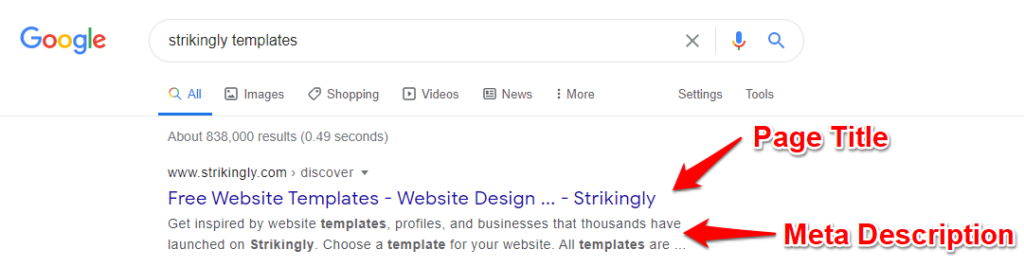
Page Titles and Meta Descriptions
The title tag remains a primary ranking signal. It should be unique across your entire site to prevent content cannibalization. It must clearly communicate the page’s purpose, leading with the most important keyword and staying within a 50–60 character limit.
Using separators like pipes (|) or hyphens can help maintain a balance between keyword placement and brand identity.
Meta descriptions function as the “ad copy” of your search listing. While they do not directly impact rankings, they heavily influence the Click-Through Rate (CTR). Keep these under 155 characters to avoid truncation.
Incorporating a clear call-to-action (CTA) such as “Shop now for free delivery” or “Discover the new collection” encourages the user to choose your link over a competitor’s.
Heading Hierarchy (H1)
The H1 tag must clearly define the page’s focus. In most e-commerce environments, the H1 should be the exact name of the product. This creates immediate alignment between the user’s expectation and the page’s content.
Placing the primary target keyword toward the beginning of this tag reinforces its relevance to search crawlers.
Visual Media Optimization
In a digital environment where customers cannot touch the product, high-quality images and videos are your most powerful sales tools. However, they must be optimized to prevent site slowdowns.
- Modern Formats: Utilize WebP or AVIF formats to provide high-resolution visuals at significantly smaller file sizes than traditional JPEGs.
- Descriptive Filenames: Use keyword-rich, hyphen-separated filenames (e.g., mens-minimalist-leather-wallet-brown.webp) instead of generic camera-generated codes.
- Alternative (Alt) Text: Provide descriptive alt text for every image. This is a dual-purpose requirement: it assists visually impaired users via screen readers and provides search engine bots with context about the image content.
- Video Content: Videos can explain complex products more effectively than text. Ensure videos are hosted responsibly (perhaps via a CDN) and use branded, high-quality thumbnails. Many mobile users watch videos without sound, so ensure your video content is visually self-explanatory or includes captions.
URL Architecture and Navigation
A clean, logical URL structure builds trust with the user and aids search engine crawlability.
- Avoid: example.com/product/12345?sessionid=abc
- Adopt: example.com/category/subcategory/product-name
Keep URLs concise, use lowercase lettering, and separate words with hyphens. A well-structured URL tells the user exactly where they are in the site’s hierarchy and looks more professional when shared on social media or in messages.
Technical Performance and Core Web Vitals
Google’s Core Web Vitals are a set of specific factors that Google considers important in a webpage’s overall user experience. This data is often gathered through real user monitoring (RUM), meaning your rankings depend on how actual visitors experience your speed and stability.
- LCP (Largest Contentful Paint): This measures how long it takes for the largest element (usually a product image or headline) to become visible. Aim for 2.5 seconds or less.
- FID (First Input Delay): This measures responsiveness. How long does the page take to react when a user clicks a button or interacts with a menu?
- CLS (Cumulative Layout Shift): This measures visual stability. Do elements jump around as the page loads? High layout shift is frustrating for users and penalized by Google.
To optimize these, keep your site lightweight. Limit the number of third-party apps and scripts, minify your code, and ensure your web hosting is capable of handling your traffic volume.
Enhancing the User Experience (UX) Framework
Breadcrumb Navigation
Breadcrumbs serve as a secondary navigation trail. They allow users to quickly move back to a broader category or the homepage without using the browser’s back button. This structure is a vital part of how to optimize Magento category page for SEO.
For search engines, breadcrumb schema provides a clear map of your site’s internal structure, which can be displayed directly in search results to improve CTR.
Detailed Content and Social Proof
A high-converting PDP must go beyond basic dimensions.
- Comprehensive Descriptions: Aim for 400-600 words of original content. Avoid copying manufacturer text. Focus on the benefits and unique selling points (USPs) of the product.
- Variant Management: If a product comes in multiple colors or sizes, use a single page with dynamic selection to prevent internal content duplication and cannibalization.
- Social Validation: Ratings and reviews are essential. Use “Review Schema” to show star ratings in the SERPs. This builds immediate credibility.
Conversion Triggers: CTA and Delivery
The “Add to Cart” button should be the visual anchor of the page. It must stand out through contrasting colors and be placed “above the fold” so users don’t have to scroll to find it. Directly beneath the CTA, place shipping and return information.
Mentioning “Free Shipping” or “Easy 30-Day Returns” at this specific moment can overcome final purchase hesitation.

Advanced Growth and Authority Building
Internal Linking and Schema
Strategic internal linking helps search engines discover new pages and understand the relationships between different products. Link to related items (upselling) or similar products (cross-selling).
Implementing Structured Data (Schema) is the “language” of search engines. It allows your product to appear as a “Rich Snippet,” showing its price, availability, and rating before a user even clicks.
Out-of-Stock Management
Handling out-of-stock items is a common e-commerce challenge. Deleting the page can lead to “404 errors” and lost SEO equity. Instead, keep the page live, clearly label the item as unavailable, and provide an email sign-up for restock alerts along with recommendations for similar products.
Local SEO and Backlinks
If you have a physical presence, incorporate local keywords. A “Chicago furniture store” will rank better for local searches than a generic “furniture store.”
Additionally, building backlinks from reputable blogs and directories acts as a “vote of confidence” for your site, significantly boosting your domain authority and product rankings.
FAQ: Real-World Implementation and Pitfalls
Q: Why is unique content so important if the manufacturer description is accurate?
A: Search engines prioritize original content. If you use the same text as 500 other retailers, your page has no unique value and is unlikely to rank. Unique copy also allows you to speak directly to your specific audience’s needs and pain points.
Q: How often should I audit my product pages for speed?
A: Ideally, every time you add a new third-party app or a large batch of products. Regular testing via tools like Google PageSpeed Insights ensures that incremental changes don’t eventually lead to a slow, bloated user experience.
Q: Is it better to have one long page or several tabs for specs and reviews?
A: From a UX perspective, tabs or “accordions” help keep the page clean and scannable. However, ensure that the content within those tabs is still crawlable by search engines to maintain SEO value.
Q: Should I remove products that are permanently discontinued?
A: If a product will never return, you should implement a “301 redirect” to the most relevant replacement or the parent category. This preserves the SEO authority the old page built over time.
Q: Can social media buttons actually help my SEO?
A: While social shares are not a direct ranking factor, they increase the visibility of your products. Increased visibility leads to more traffic and more potential backlinks, which are major ranking factors.
Q: What is the ideal word count for a product description?
A: While 150-200 words is a baseline, deeper content (400-600 words) usually performs better in search rankings. Use this space to answer common customer questions and describe the product’s use-cases in detail.
Conclusion
The objective to Optimize product pages for SEO and UX is a continuous cycle of testing and refinement. By balancing technical precision—such as schema markup and site speed—with a human-centric design that prioritizes clarity and trust, e-commerce practitioners can build a resilient digital presence.
Fast loading, visual stability, and high-quality information are not just technical requirements; they are the pillars of a positive customer experience. Focus on providing genuine value to the visitor, and the search rankings and revenue will follow as a natural consequence.