
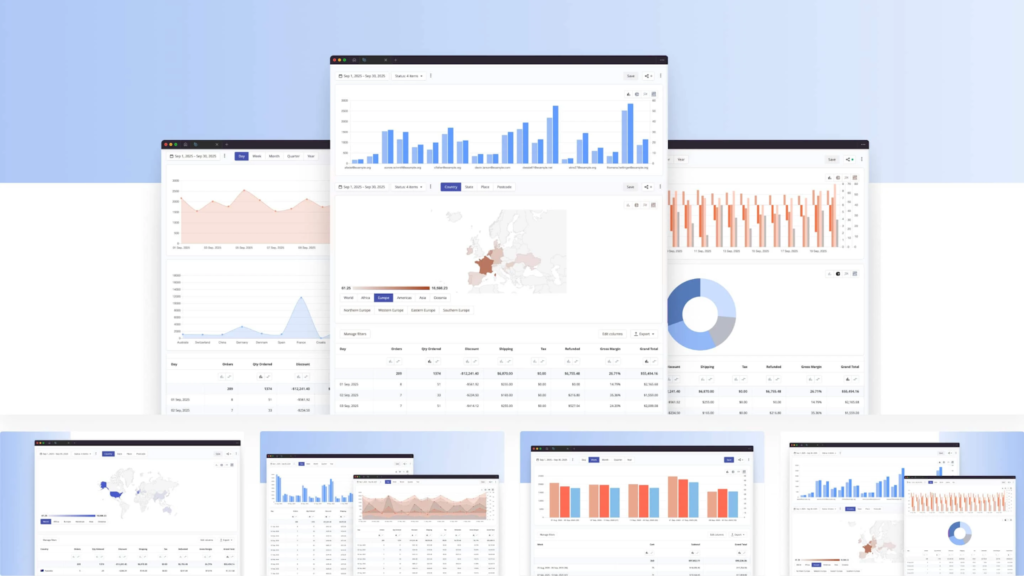
Marketing in the modern e-commerce landscape is no longer about who has the loudest voice, but who has the most accurate data. For businesses running on Magento, the platform provides a goldmine of information that can transform guesswork into precision-engineered growth. By understanding exactly how customers interact with your store, you can stop wasting budget on underperforming channels and start scaling what works.
Data acts as the foundation for every sustainable business model, especially when margins are tight. When merchants analyze their storefront metrics, they gain the ability to predict future needs rather than just reacting to past failures.
Why analytics-driven marketing matters in Magento
In a competitive digital marketplace, the ability to pivot based on real-time information is a significant advantage. Analytics-driven marketing allows you to treat your store as a living laboratory where every click, purchase, and bounce provides a lesson in consumer behavior.
- Decisions based on hard evidence reduce the risk of failed product launches.
- Marketing spend is optimized by focusing only on channels with high conversion rates.
- Long-term customer relationships are built through consistent, relevant interactions.
Using these metrics ensures that every dollar in your marketing budget is working toward a specific, measurable goal. Without this focus, e-commerce stores often find themselves in a cycle of high traffic but low profitability.
Limitations of intuition-led marketing decisions
Many store owners rely on “gut feelings” to decide which products to feature or which audience to target. While experience is valuable, intuition is often biased and cannot scale. You might think a specific category is your best seller because it has high volume, but analytics might reveal that the high return rate or low profit margin makes it a net loss for the business.
- Internal biases often lead merchants to promote products they personally like rather than what the market demands.
- Intuition cannot account for the thousands of micro-interactions that happen across multiple devices.
- Subjective decision-making makes it difficult to replicate success across different seasons or markets.
Intuition fails to account for the complexity of multi-touch customer journeys, often leading to misallocated marketing spend. By transitioning to a data-first approach, you remove the emotional weight of decision-making and focus on what the numbers prove to be true.
The role of first-party commerce data in marketing
With the decline of third-party cookies and increasing privacy regulations, first-party data has become the most valuable asset an e-commerce brand can own. This is data you collect directly from your own interactions with customers through your Magento store.
- First-party data is more accurate because it comes directly from your specific customer base.
- It provides a deeper level of insight into actual buying intent versus simple browsing behavior.
- Owning your data protects your marketing strategy from changes in external advertising platform policies.
Magento stores capture critical details: what users search for, what they add to their carts, how long they hesitate before buying, and their lifetime value. Leveraging this data ensures your marketing remains compliant while staying highly relevant to your actual audience.
Where Magento analytics fits into the marketing stack
Magento analytics does not exist in a vacuum; it acts as the “source of truth” that sits between your store and your advertising platforms. While your ad manager tells you how many people clicked an ad, Magento tells you if those people actually became profitable customers.
- Native Magento reports provide the raw transactional data needed for financial accuracy.
- External tools translate this raw data into visual trends that marketing teams can easily digest.
- Integration ensures that sales data and marketing performance are viewed in the same context.
To bridge this gap effectively, many merchants utilize a Magento google analytics integration to sync store performance with broader web traffic data. This creates a unified view of the customer funnel from the first click to the final shipment.
How Magento analytics data can inform your marketing decisions
The core of a successful strategy lies in the ability to translate technical reports into marketing actions. When you look at your dashboard, you shouldn’t just see numbers; you should see opportunities to improve the customer experience and increase revenue.
- Analyzing page exit rates helps identify friction points in the checkout process.
- Tracking search queries on your site reveals what products your customers want but can’t find.
- Monitoring coupon usage shows which types of incentives actually drive volume.
By focusing on these specific data points, you can refine your store’s layout and promotional strategy. This ensures that the user journey is as smooth as possible, leading to higher conversion rates and better brand perception.
Identifying high-value customers and profitable segments
One of the most powerful ways Magento analytics data can inform your marketing decisions is through customer segmentation. By analyzing purchase history, you can identify your “whales”—the small percentage of customers who contribute a large portion of your revenue.
- Rfm analysis (recency, frequency, monetary) helps categorize customers based on their buying habits.
- Geographic data allows for localized marketing campaigns that resonate with regional preferences.
- Demographic insights help refine the tone and style of your creative assets.
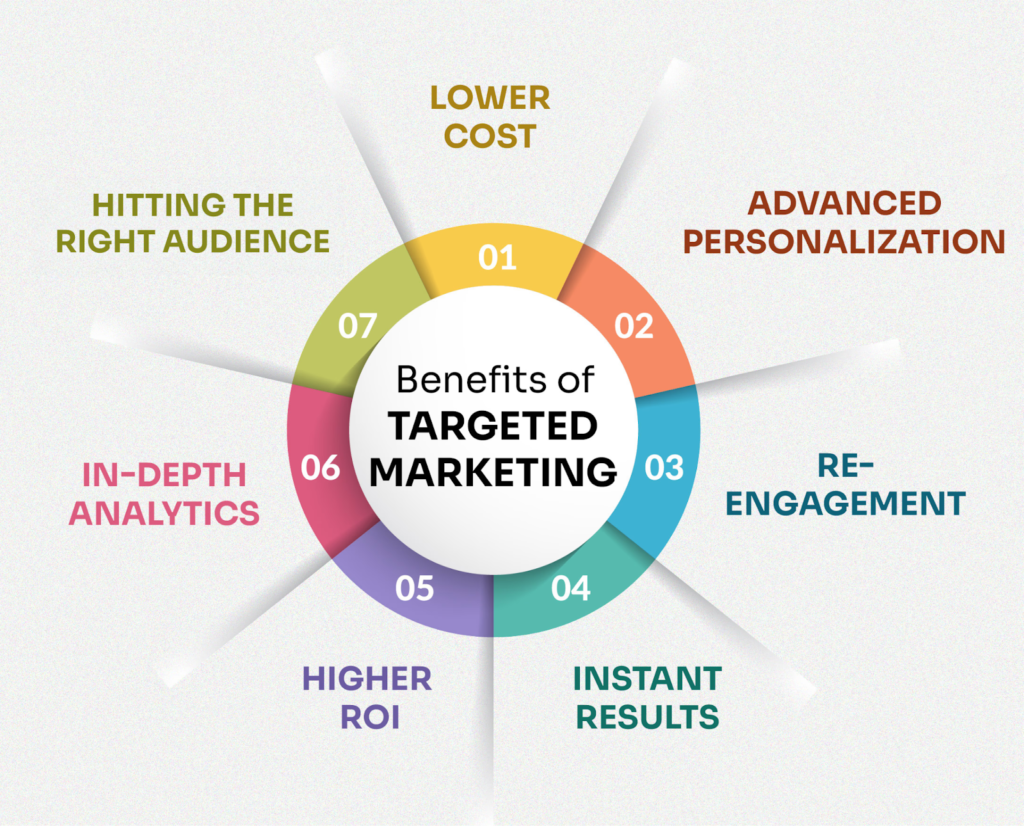
Instead of sending the same generic email to everyone, you can create exclusive loyalty campaigns for this high-value group. Segmenting by geography, average order value (aov), or even product preference allows for hyper-targeted advertising that yields a much higher return on investment.
Understanding product performance and demand trends
Magento’s native reports provide deep insights into product affinity and sales velocity. This data allows you to see which items are trending and which are collecting dust in the warehouse, enabling better inventory management.
- Top-selling product reports highlight which items deserve the most prominent placement on your homepage.
- Low-stock alerts combined with high-demand data help you prioritize reordering schedules.
- Product correlation data shows which items are frequently purchased together during a single session.
By looking at “frequently bought together” data, you can inform your cross-selling and up-selling strategies in your marketing emails or on-site banners. For better visibility in these search results, using a Magento 2 SEO extension can help ensure your high-performing products are easily discoverable by search engines.
Improving campaign targeting and personalization
Personalization is no longer a luxury; it is an expectation. Analytics data tells you the specific “path to purchase” for different buyer personas, allowing you to tailor your messaging to their specific needs and interests.
- Dynamic content blocks can change based on a user’s previous browsing history within the store.
- Behavioral triggers can send automated discounts when a user spends a certain amount of time on a page.
- Personalized product recommendations increase the likelihood of adding additional items to the cart.
If you notice that your facebook ads drive traffic but have a high bounce rate, while your email newsletter has a high conversion rate for returning users, you can shift your strategy. This data allows you to deliver the right message to the right person at the right time.
Optimizing content, pricing, and promotions using data
Your data can tell you if a promotion is actually successful or just cannibalizing your margins. By using A/B testing and tracking the results in your analytics, you can determine which offers resonate most with your audience.
- Price sensitivity analysis helps determine the “sweet spot” for maximizing both volume and profit.
- Content engagement metrics show which blog posts or videos lead to the most assisted conversions.
- Promotional heatmaps reveal which areas of your site are the most effective for placing calls to action.
To track these intricate interactions efficiently, a Magento google tag manager setup is essential. It allows you to track specific button clicks, video views, and scroll depth without needing to rewrite code every time you launch a new campaign.
Aligning marketing strategies with sales and revenue insights
The ultimate goal of marketing is to drive profitable revenue. Magento analytics help you align marketing goals with actual business health by providing a clear picture of the relationship between traffic and profit.
- Gross margin reports help you identify which products are actually making money after all costs.
- Customer acquisition cost (cac) must be balanced against customer lifetime value (ltv) for sustainability.
- Refund and return rates highlight potential issues with product quality or marketing descriptions.
For instance, if your data shows that a specific product line has a high return rate, marketing should stop promoting it. Instead, marketing should focus on products with high “contribution margins”—the profit left after accounting for the cost of goods and shipping.
Turning Magento analytics into continuous marketing improvement
Data is only useful if it leads to a change in behavior. To truly benefit, you must create a feedback loop where insights lead to actions, and those actions are then measured to generate new insights.
- Set clear kpis for every marketing experiment to measure success objectively.
- Schedule regular data reviews with your team to discuss findings and plan next steps.
- Use automated reporting to stay informed about sudden changes in site performance.
This iterative process ensures that your store is always evolving to meet the needs of your customers. By constantly testing and refining, you can stay ahead of the competition and maintain a high level of performance.
Integrating Magento analytics with marketing and CRM tools
To make your data actionable, it needs to flow into the tools your team uses daily. Integrating Magento with your customer relationship management (crm) system and email marketing platform allows for real-time automation.
- Synchronized data allows for highly personalized email flows based on recent purchases.
- Crm integration provides your sales and support teams with a full history of customer interactions.
- Real-time updates ensure that customers never receive promotions for items they just purchased.
When a customer reaches a certain lifetime value threshold in Magento, your CRM can automatically tag them as a “VIP,” triggering a personalized thank-you note or a gift. This integration removes the manual work of exporting lists and ensures your marketing is always based on current data.
Tracking marketing performance and attribution
Attribution is the process of determining which marketing touchpoints led to a sale. Because Magento tracks the final transaction, it is the anchor for your attribution model and the key to understanding your true return on ad spend.
- First-click attribution gives credit to the channel that introduced the customer to your brand.
- Last-click attribution highlights the channel that finally convinced the user to make a purchase.
- Linear attribution spreads credit across all touchpoints to provide a more holistic view of the journey.
Perhaps your social media ads don’t get the final “buy” click, but they are the primary way new customers discover your brand. Without this data, you might mistakenly cut the social media budget and see your total sales drop weeks later.
Refining decisions as customer behavior evolves
Customer behavior is not static. Trends change, new competitors emerge, and economic factors shift how people spend money. A robust analytics strategy involves regular “health checks” to stay relevant.
- Monitor device usage to ensure your mobile experience remains top-tier as mobile shopping grows.
- Track payment method preferences to offer the most popular options in different regions.
- Analyze seasonal shifts to prepare your inventory and marketing assets well in advance.
By staying agile and letting the data lead the way, you can refine your marketing tactics to meet the customer where they are today. Regularly updating your strategy based on fresh data ensures that your business remains resilient in a changing market.
Conclusion
Understanding how Magento analytics data can inform your marketing decisions is the difference between a store that merely exists and one that thrives. By moving away from intuition and embracing the concrete evidence provided by your commerce platform, you can create more personalized, efficient, and profitable campaigns. Success in e-commerce is a marathon, not a sprint, and your data is the map that keeps you on the right path. Start by ensuring your tracking is accurate, integrate your data across your tech stack, and remain committed to constant optimization based on the insights you uncover every day.