
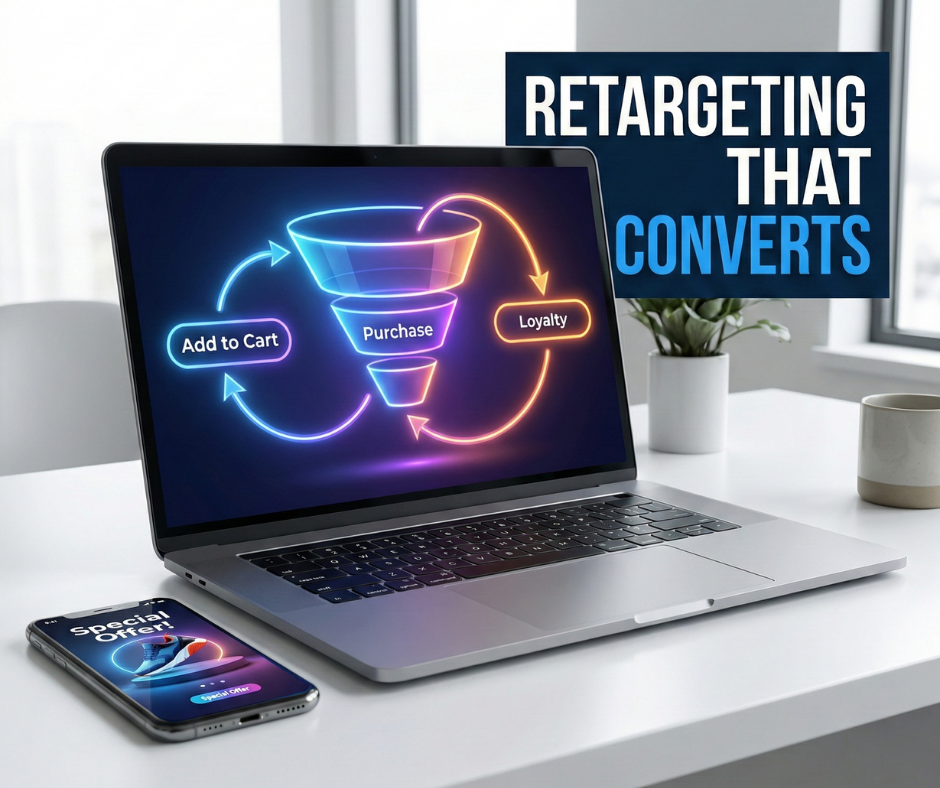
In the high-stakes eCommerce landscape, traffic is costly to acquire yet effortless to lose, with nearly 98% of Magento visitors departing without a purchase on their first visit. However, a site exit is rarely a definitive “no”; it is usually a “not right now.” Strategic retargeting bridges this gap by re-engaging these “warm” audiences through targeted ads across social and display networks, transforming fleeting interest into a high-converting revenue stream and protecting your initial marketing investment.
To truly move the needle, merchants must move beyond generic visibility and prioritize bottom-line metrics like Return on Ad Spend (ROAS) and Cost Per Acquisition (CPA). Effective Magento retargeting campaigns are built on precision, timing, and relevance rather than just frequency. This guide provides the technical blueprint and strategic framework required to build an automated, high-conversion retargeting engine that maximizes your store’s growth potential.
What makes a Magento retargeting campaign convert?
A successful retargeting campaign is differentiated by its ability to drive action rather than just impressions. Many businesses make the mistake of visibility-focused retargeting, where they show the same brand banner to every person who visited the site within the last 30 days. This “shotgun” approach leads to high ad fatigue and low conversion rates.
Conversion-focused retargeting relies on four key success factors:
- Data precision: Knowing exactly what product a user viewed and how much time they spent on that page.
- Granular segmentation: Separating someone who looked at your “About Us” page from someone who added a $500 item to their cart.
- Strategic timing: Showing the ad when the buying intent is still fresh, but not so frequently that it becomes intrusive.
- Tailored messaging: Providing a specific reason to return, such as a solution to a hesitation or a personalized incentive.
Common misconceptions suggest that retargeting is only about following users around the internet until they surrender. In reality, modern retargeting is a service to the customer—it reminds them of a product they wanted and simplifies the path back to the checkout page.
Prerequisites before setting up Magento retargeting
Before launching any campaign, your Magento store must meet specific technical and operational standards. A campaign built on a shaky foundation will fail regardless of how much you spend on ads.
Clean Magento tracking and analytics setup
You must have a “Single Source of Truth” for your data. This typically involves a robust Google Analytics 4 (GA4) integration. Ensure that your “Ecommerce Events” are firing correctly. If Magento isn’t accurately reporting product views or cart values to your tracking tools, your retargeting audiences will be incomplete or inaccurate. This requires a properly configured GTM container that listens for dataLayer events pushed by Magento’s backend.
Accurate product catalog and pricing data
For dynamic retargeting—where the ad shows the exact product the user viewed—your product feed is critical. This feed (usually a CSV or XML file) must be synced in real-time with your Magento database. If an ad shows a product that is “Out of Stock” or has an outdated price, the conversion will fail at the landing page, wasting your ad budget. To mitigate this loss, utilizing Magento back-in-stock notifications allows you to capture that lost intent and automatically re-invite users back once the inventory is replenished, turning a potential bounce into a future conversion.
Customer consent, privacy, and compliance readiness
With the rise of GDPR, CCPA, and Apple’s App Tracking Transparency (ATT), privacy is no longer optional. Your Magento store must have a compliant cookie consent banner that correctly blocks tracking pixels until the user opts in. Failure to manage consent properly can lead to legal issues and skewed data that compromises the performance of your Magento retargeting campaigns.
Clear conversion goals and kpis
Define what a “win” looks like. Are you targeting a 5x ROAS? A $20 CPA? Having these targets allows you to evaluate the performance of different audience segments and cut underperforming campaigns quickly.
Step 1 – Implement tracking correctly in Magento
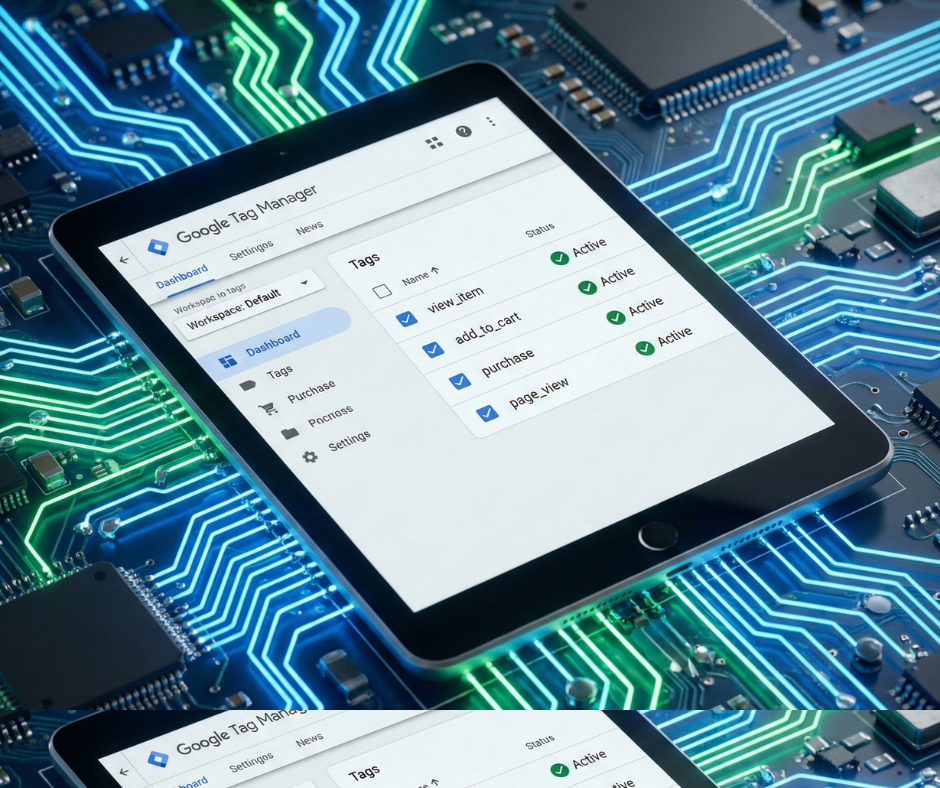
Tracking is the “nervous system” of retargeting. In Magento, the most efficient way to manage this is through a Data Layer and Google Tag Manager (GTM).
Tracking pixels, tags, and first-party data
You need to install the specific pixels for the platforms you plan to use (e.g., Meta Pixel, Google Ads Remarketing Tag, Pinterest Tag). Instead of hard-coding these into your Magento templates—which can slow down the site—use a specialized Magento 2 GTM extension to push data into a structured Data Layer. This ensures that the pixel can see not just the page URL, but also the Product SKU, Price, and Category.
Verifying event tracking
You must verify that three core events are tracking perfectly:
- view_item: Triggered when a user views a product detail page. This is the foundation for “Product Viewer” audiences.
- add_to_cart: Triggered when the user adds an item to their basket. This represents high intent.
- purchase: This is the most important event. It allows you to “burn the pixel,” meaning you stop showing ads to someone who has already bought the item, preventing wasted spend and customer annoyance.
Avoiding duplicate or broken tracking signals
Duplicate signals (firing a conversion twice) will artificially inflate your ROAS, leading to poor budget allocation. Use the “Preview” mode in GTM and browser extensions like Meta Pixel Helper to ensure each event fires exactly once per action. Additionally, monitor the “Server-Side” tracking capabilities of your Magento store to bypass ad-blockers and improve data accuracy.
Step 2 – Define high-intent audiences

In retargeting, not all visitors are created equal. You must segment your Magento traffic by their level of intent to ensure high conversion rates.
Cart abandoners
These are your highest-priority targets. They have done everything except pay.
- Why they convert best: They have already overcome the “product discovery” phase and have signaled a clear desire to own the item.
- Strategy: Create a narrow time window (e.g., 0–3 days) for aggressive retargeting. Exclude anyone who has purchased in the last 7 days to maintain brand professionalism. As a complementary strategy to off-site retargeting, deploying Magento exit-intent popups can help you secure the transaction before the buyer even leaves the site, offering a final nudge or discount to high-intent abandoners.
Product viewers
These users looked at a specific product but didn’t take action.
- Identifying interest: Someone who viewed a product for 60 seconds is a better lead than someone who bounced after 2 seconds.
- Exclusions: Exclude “low-intent” visits, such as those that spent less than 10 seconds on the page, to keep your audience quality high and your CPC low.
Category & search visitors
These are mid-funnel users who are still in the research phase.
- Effective retargeting: Instead of showing a specific product, show a “Best Sellers” carousel or a brand-story video that reinforces your authority in that specific category (e.g., “The Best Winter Boots of 2025”).
Step 3 – Choose the right retargeting channels
Where you show your ads is just as important as who you show them to. Matching the channel to the user’s current mindset is essential for conversion.
- Social retargeting (Meta, TikTok): Best for visual, emotional, and lifestyle products. Meta’s “Dynamic Product Ads” (DPA) are exceptionally effective for Magento stores because they automatically show users the exact SKUs they left behind.
- Search retargeting (RLSA): “Remarketing Lists for Search Ads” allow you to bid higher on keywords when the searcher is someone who has previously visited your site. This is perfect for high-competition B2B or technical niches where the research cycle is long.
- Email & SMS retargeting: This is “internal” retargeting. If you have the user’s email, an automated Magento 2 abandoned cart email is often the cheapest and most effective way to recover a sale.
Step 4 – Build retargeting creatives that drive action

Your ad creative is the only thing the customer actually sees. It must feel relevant, urgent, and aesthetically aligned with your Magento storefront.
Personalization vs generic messaging
Generic ads like “Come back and shop with us!” often fail. Instead, use dynamic data to say, “Still thinking about the [Product Name]? We have it ready for you!” This level of personalization makes the ad feel less like a promotion and more like a helpful reminder.
Copy, visuals, and offers that convert
- The Visual: For cart abandoners, use a clean image of the product. For brand-level retargeting, use social proof, such as a video of a customer unboxing the item.
- The Copy: Focus on overcoming objections. If your data shows people leave because of shipping costs, use copy like “Get Free Shipping on your order today!”
- The Offer: Don’t lead with a discount. Start with a reminder. If they don’t convert after 3 days, then introduce a 10% coupon to nudge the price-sensitive buyer.
Step 5 – Set smart frequency and timing rules
The fastest way to destroy a brand’s reputation is through over-retargeting. You must find the “sweet spot” where your brand remains top-of-mind without becoming a nuisance.
Avoiding ad fatigue
Ad fatigue occurs when a user sees your ad so many times they become annoyed or “blind” to it. Set a frequency cap. A standard recommendation is 15–20 impressions per user per month across all Magento retargeting campaigns. If they haven’t bought after 20 views, they likely aren’t going to, and you are better off spending that money on a fresh lead.
Timing based on buying intent
The window for retargeting should match your product’s buying cycle. If you sell fast-fashion, your window should be short (7–14 days). If you sell high-end B2B machinery, your retargeting window might be 90 days, with the messaging shifting from “Product Specs” to “Case Studies” over time.
Step 6 – Optimize landing pages for retargeted traffic
One of the biggest mistakes Magento merchants make is sending retargeted traffic back to the homepage. This creates massive friction and kills conversion rates instantly.
Reducing friction for returning users
If a user clicks an ad for a specific pair of shoes, they must land directly on that shoe’s product page. Furthermore, if the ad promised a discount, that discount should be automatically applied via a URL parameter or clearly stated in a prominent header banner.
Speed and mobile optimization
Retargeted users are often on mobile devices. If your Magento theme is slow to load or has a cumbersome mobile checkout, they will leave again. Ensure your “Time to Interactive” is under 2.5 seconds. For returning users, consider enabling Magento 2 one step checkout to minimize the number of fields they have to fill out a second time.
Step 7 – Measure what actually matters
To determine if your campaigns truly convert, you must look at the right data points and avoid falling for “vanity metrics.”
Separating assisted conversions
A user might see a retargeting ad, not click it, but then search for your brand and buy an hour later. This is an “Assisted Conversion” (or View-Through Conversion). While you shouldn’t rely solely on these, ignoring them will make your retargeting look less effective than it actually is.
Connecting results to Magento revenue
Compare your ad platform’s reported revenue with your Magento Admin “Order” report. Use UTM parameters for every campaign to track exactly which ads drove which orders in Google Analytics. This allows you to calculate your True ROAS—the actual dollar amount returned for every dollar spent on ads.
Step 8 – Test and optimize retargeting campaigns
Retargeting is not a “set and forget” strategy. It requires constant iteration to maintain high performance over time.
- A/B testing creatives: Test a lifestyle image against a product-only image. You might find that lifestyle images convert better for discovery, while product images convert better for cart recovery.
- Testing incentives: Does “Free Shipping” perform better than “10% Off”? Run these tests on small audience segments before scaling the winner to all your Magento retargeting campaigns.
- Scaling what works: If your “Cart Abandoner 0–3 Day” segment has a 10x ROAS, increase its budget. If your “Blog Viewer” segment has a 0.5x ROAS, stop spending on it immediately.
Common Magento retargeting setup mistakes to avoid
Even experienced marketers make mistakes in the setup process. To ensure your store’s overall health, it is worth reviewing these 20 tips to boost your Magento sales alongside your retargeting strategy.
- Targeting everyone: Sending the same ad to every visitor is a waste of money. Focus on high-intent segments.
- Over-reliance on discounts: If you always offer a discount in your retargeting, customers will learn to abandon their carts just to get the code. This devalues your brand.
- Ignoring cross-device behavior: A user might browse on their phone during lunch and buy on their laptop at night. Use platforms like Google and Meta that have robust cross-device tracking to maintain a consistent journey.
- Failure to exclude buyers: There is nothing more annoying to a customer than seeing an ad for the product they just bought. Ensure your “Purchase” exclusion list is updated in real-time.
Advanced tips to increase retargeting conversion rates
Segmenting by customer lifetime value (ltv)
Use your Magento data to identify your highest-spending customers. Create a “Lookalike” audience based on these VIPs to find new customers who are likely to spend more. You can also bid higher to retarget high-LTV customers when they return to the site, as their potential value justifies the higher CPC.
Combining retargeting with on-site personalization
When a retargeted user returns to your Magento store, the site should acknowledge them. Use “Customer Segments” in Magento to show a personalized “Welcome Back” banner or a “Pick up where you left off” block on the homepage. This continuity between the ad and the site experience dramatically increases trust and conversion.
Conclusion
Successfully setting up Magento retargeting campaigns that convert is a technical discipline that requires a deep understanding of user behavior and platform integration. By focusing on intent-based segmentation, dynamic creatives, and frictionless landing pages, you can transform lost traffic into a predictable revenue stream.
The key takeaway is that retargeting is an investment in the intent your brand has already generated. Volume-based campaigns might get clicks, but conversion-focused campaigns build a sustainable business. As you move forward, prioritize clean tracking, respect the user’s journey through frequency limits, and never stop testing. Magento provides the powerful foundation; your strategy provides the results. Start by recovering your cart abandoners, and then scale your reach as your data reveals the true patterns of your customers’ path to purchase.