
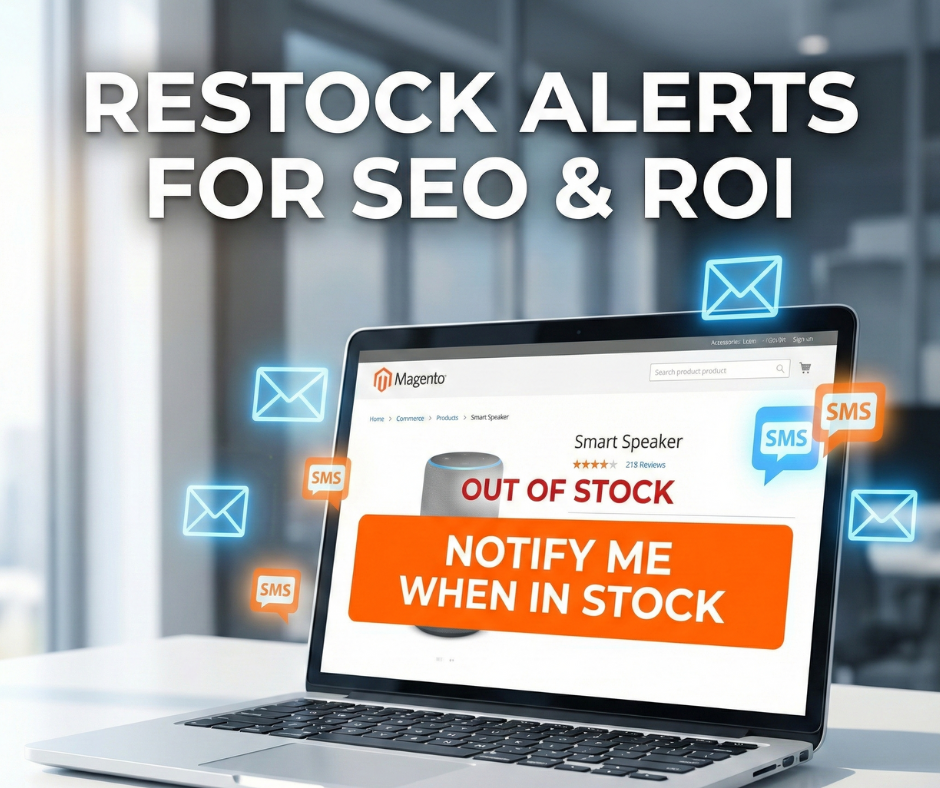
In the high-velocity environment of eCommerce, inventory fluctuations are an unavoidable reality. For Magento merchants, an out-of-stock product often results in a chain reaction that damages both customer retention and search engine optimization (SEO) performance as shoppers bounce back to search results, signaling to search engines that the page did not satisfy their intent.
Understanding how Magento back-in-stock notifications can improve retention and SEO traffic is critical for building a resilient, long-term growth strategy. These notifications act as a bridge, transforming a “dead-end” page into a high-converting lead generation tool that keeps URLs live and authoritative in search rankings while building a valuable list of prospective buyers ready to convert the moment inventory is replenished.
Understanding back-in-stock notifications in Magento
Back-in-stock notifications are automated alerts that allow customers to sign up for a notification when a currently unavailable product returns to inventory. In the Magento ecosystem, these are essentially event-driven triggers. When a customer submits their contact information on a product detail page (PDP) that is marked as “Out of Stock,” the system creates a record in the database linked to that specific SKU and the user’s identity.
These notifications typically utilize three primary channels. Email is the most common, providing a reliable and professional way to deliver restock news. SMS notifications are increasingly popular due to their nearly 98% open rates and immediate delivery, which is essential for high-demand items that may sell out again quickly. Push notifications offer a low-friction way for returning mobile users to stay informed without sharing personal contact details.
Magento 2 offers basic native functionality for stock alerts, primarily within Adobe Commerce (formerly Magento Enterprise). This native feature allows logged-in customers to sign up for price and stock alerts via their account dashboard. However, for most Magento Open Source users or those requiring a more frictionless experience for guest users, specialized extensions are necessary. These extensions provide “Notify Me” buttons that appear automatically when inventory hits zero, supporting multi-channel delivery and advanced analytics to track the revenue recovered by each alert.
Why out-of-stock pages cause traffic and retention loss
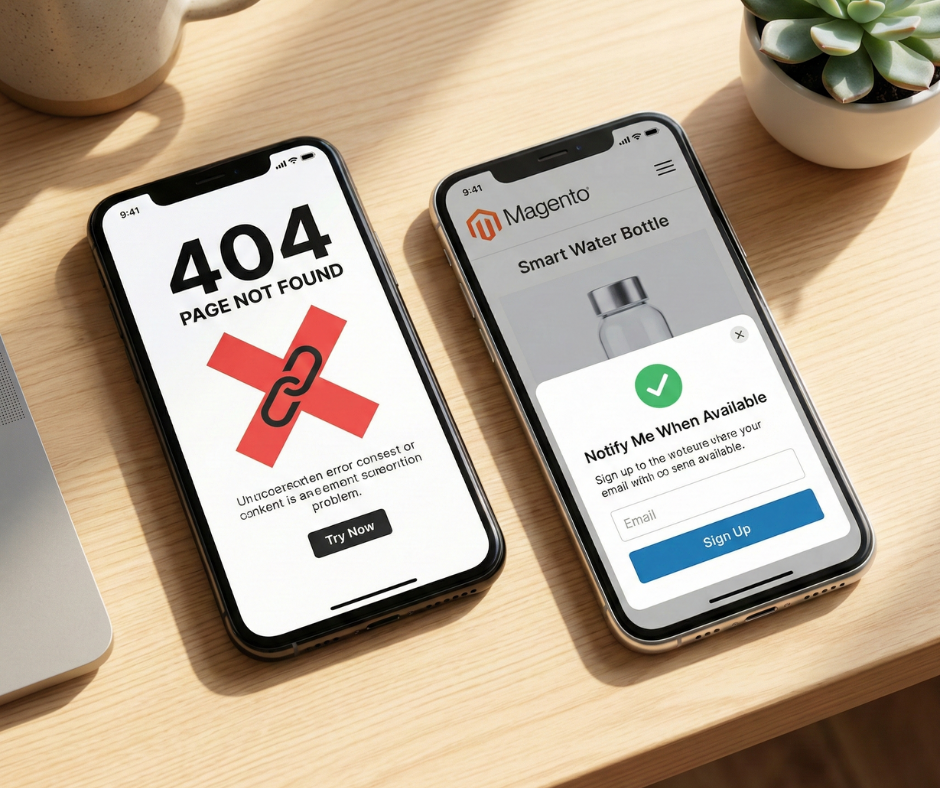
When a product goes out of stock, the standard behavior for many Magento stores is to either hide the product from the storefront or simply display a static “Out of Stock” message. Both approaches carry significant risks.
Hiding or deactivating the product page is often the most damaging move for SEO. When a URL returns a 404 error or is redirected to a category page, it loses its accumulated authority and keyword rankings. If a page that once ranked for “blue waterproof hiking boots” disappears, search engine bots will eventually remove it from the index. Reclaiming those rankings once the product is back in stock can take months, leading to a permanent loss of organic traffic.
Even if the page remains live, a static “Out of Stock” message without a notification option creates a poor user experience. This leads to increased bounce rates. When Googlebot notices that users are clicking on your search result only to immediately return to the search engine results page (SERP), it interprets the page as low-quality for that specific query. This “pogo-sticking” behavior is a negative ranking signal that can cause your product pages to slip down the rankings even while they are live.
Furthermore, stockouts without engagement hooks represent missed opportunities to capture high-intent visitors. A shopper searching for a specific product is near the bottom of the funnel. If you cannot fulfill their need immediately and offer no way to stay updated, they will likely find a competitor who can. This results in “Retention Loss,” as you have failed to turn a visitor into a known lead or a future customer.
How back-in-stock notifications drive customer retention
The primary goal of a retention strategy is to maximize the lifetime value of every visitor. While notifications capture the immediate intent, incorporating them into broader Magento loyalty programs allows you to reward those patient shoppers with exclusive points or early access, turning a single restock event into a long-term commitment. Back-in-stock notifications are a powerful retention tool because they capture customer intent at the exact moment of peak interest, preventing the “competitive drift” that occurs when a buyer feels forced to look elsewhere.
- Creating a psychological commitment: By offering a “Notify Me” option, you move the customer from a “searching” state to a “waiting” state. This micro-conversion acts as a significant psychological anchor. The shopper has essentially said, “I want this specific item from your store, and I am willing to wait for it.” This reduces the likelihood that they will continue their search elsewhere, as they now have a confirmed path to acquisition with your brand.
- Transitioning from push to pull marketing: Unlike aggressive remarketing ads that can feel intrusive or desperate, a restock alert is a requested service. It provides a positive brand touchpoint that reinforces trust. When the notification arrives, it acts as a personalized invitation to return, often resulting in conversion rates that are 5x to 10x higher than standard marketing emails.
- Capturing zero-party data: Every sign-up for a restock alert is a verified signal of intent. This data allows Magento merchants to build “high-velocity” email segments. You aren’t just guessing what a user might like; you have a direct request for a specific SKU. This level of data accuracy is the foundation of high-ROI retention campaigns.
- Building brand integrity through transparency: Providing a proactive solution during inventory shortages demonstrates that you value the customer’s time. In B2B Magento environments, where supply chain reliability is paramount, providing these alerts ensures that procurement officers can manage their schedules around your restock dates, fostering long-term professional loyalty and reducing the “churn” caused by unpredictable availability.
Building a deep strategy around how Magento back-in-stock notifications can improve retention and SEO traffic ensures your brand remains top-of-mind even when your warehouse is empty.
How back-in-stock notifications help recover SEO traffic
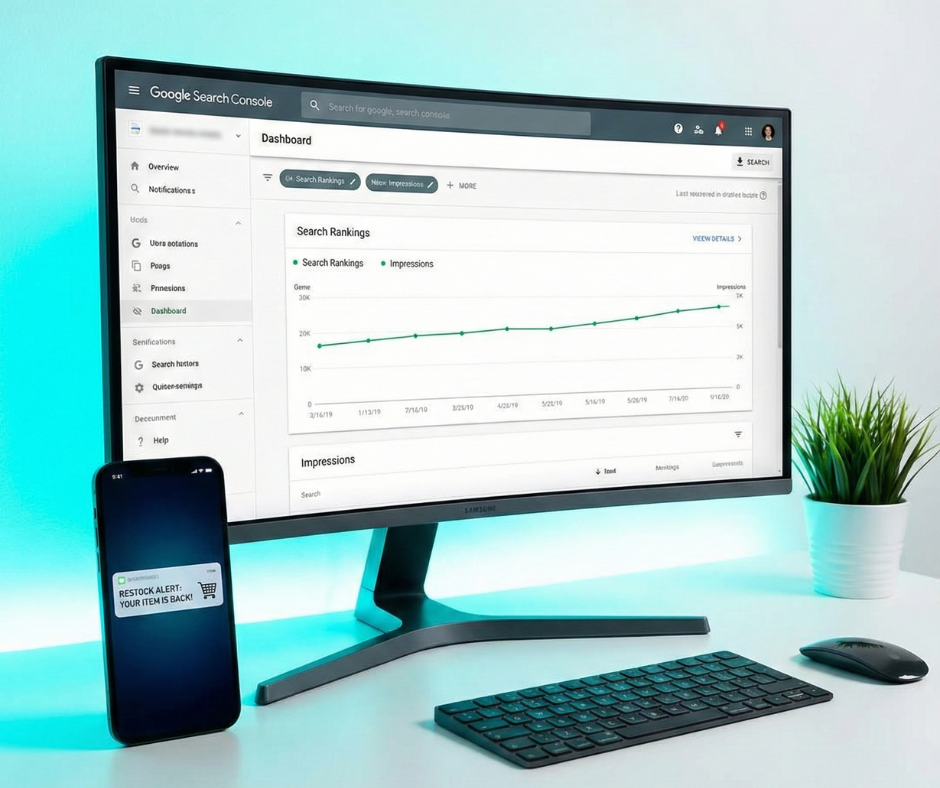
Beyond the immediate conversion benefits, back-in-stock notifications are a vital component of a technical SEO strategy. They allow you to maintain the value of your product pages even when they are not generating direct revenue, effectively “saving” your organic positions from decay.
- Preserving link equity and URL authority: Keeping out-of-stock pages live and indexable is the only way to protect the “SEO capital” you have built. By adding a notification sign-up form, you provide enough “content utility” to prevent the page from being classified as a “soft 404” by search engines. Google is much more likely to keep a page in the index if it sees that users are still interacting with it through form submissions rather than simply bouncing back to the SERP. Maintaining this level of technical integrity is as vital as personalizing Magento promotions without hurting SEO, where the objective is to serve dynamic, user-specific content without creating crawl traps or duplicate content issues.
- Reinforcing positive behavioral signals: The return visits triggered by these notifications improve crucial behavioral SEO metrics. When a large volume of users click through an email or SMS alert to return to a specific product page and complete a purchase, it sends a strong signal to Google that the page is highly relevant and satisfies user intent perfectly. This surge in “successful sessions” can help the page regain or even improve its rankings once the product is fully available again.
- Maintaining long-tail and SKU-specific rankings: Many shoppers search for specific part numbers, model names, or highly granular attributes (e.g., “heavy-duty waterproof boots size 12”). If your out-of-stock pages remain live with back-in-stock alerts, you continue to capture this high-intent niche traffic throughout the inventory gap. You are effectively turning your unavailable pages into “lead magnets” that work for your SEO 24/7.
- Crawl efficiency and freshness: A page with regular interaction—such as new contact form submissions—is seen as more “active” by search engine bots. Analyzing how Magento back-in-stock notifications can improve retention and SEO traffic helps you understand that a “living” page is crawled more frequently than a static, dormant one. This ensures that when the stock level is finally updated, search engines discover the change and update the “In Stock” status in snippets almost instantly.
SEO best practices for out-of-stock product pages in Magento
To maximize the SEO benefits of back-in-stock alerts, Magento merchants must follow a disciplined technical protocol for managing unavailable products.
The first decision is whether to keep the page live. As a general rule, if the product is expected to return within six months, the page should remain live and indexable. For discontinued items that will never return, a 301 redirect to the most relevant replacement product or the parent category is appropriate. However, for temporary stockouts, a 200 OK status code must be maintained to protect the URL’s authority.
Optimizing the content during downtime is equally important. You should update the metadata to reflect the situation, perhaps changing the meta description to include “Sign up for restock alerts.” To automate these complex technical signals and manage canonical tags effectively across thousands of out-of-stock SKUs, merchants often integrate a professional Magento SEO extension to maintain site-wide health.
On the page itself, move the “Out of Stock” message and the notification form to a prominent position, but ensure the primary product descriptions and technical specs remain visible. This ensures the page still provides value to search engine bots that are trying to understand the product’s relevance.
Finally, pay close attention to structured data. Use Schema.org markup to communicate the product’s status to search engines. For out-of-stock items, the availability property should be set to https://schema.org/OutOfStock. Crucially, if you know the restock date, use the availabilityStarts property. This transparency helps search engines display accurate information in the snippets, which can actually improve Click-Through Rate (CTR) by setting correct expectations before the user clicks.
UX best practices for high-impact back-in-stock alerts
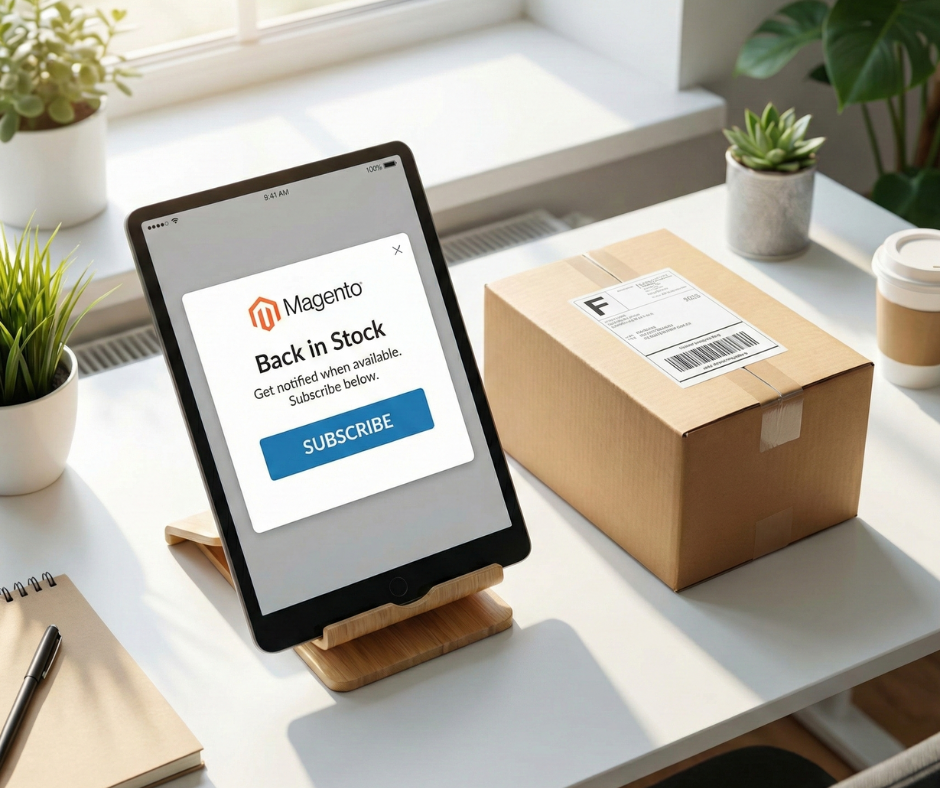
The effectiveness of a notification system depends heavily on how it is presented to the user. A poorly designed sign-up process can create friction and reduce the number of leads you capture.
Optimal placement of the notification sign-up element is critical. The “Notify Me” or “Email Me When In Stock” button should replace the “Add to Cart” button in the same visual hierarchy. It should not be a tiny link buried in the footer. Use a high-contrast color that stands out from the rest of the page to draw immediate attention to the solution.
The messaging should balance urgency with transparency. Avoid generic labels like “Submit.” Instead, use action-oriented language like “Get Notified of Restock” or “Save My Spot.” If you have an estimated restock date, display it near the sign-up form. This provides the user with a concrete timeline, which significantly increases the sign-up conversion rate.
Mobile-first design is non-negotiable. Over 60% of eCommerce traffic occurs on mobile devices, where screen real estate is limited. The notification form should be touch-friendly, with large input fields and a simple one-click submission process. Avoid complex multi-field forms; asking for just an email address or phone number is usually sufficient and maximizes the completion rate.
Conclusion
Back-in-stock notifications in Magento represent a genuine dual-purpose tool for growth by combining technical SEO discipline with a commitment to superior customer experience. By preserving URL authority and providing a clear, trust-based path for customers to return, merchants ensure that their storefront remains a high-authority destination in the eyes of both search engines and shoppers.
The final recommendation for long-term success is to treat out-of-stock data as a primary business intelligence source. By analyzing which SKUs have the highest “alert-to-purchase” ratios, you can refine procurement strategies and transform a simple alert tool into a high-performance engine for sustainable eCommerce growth.