
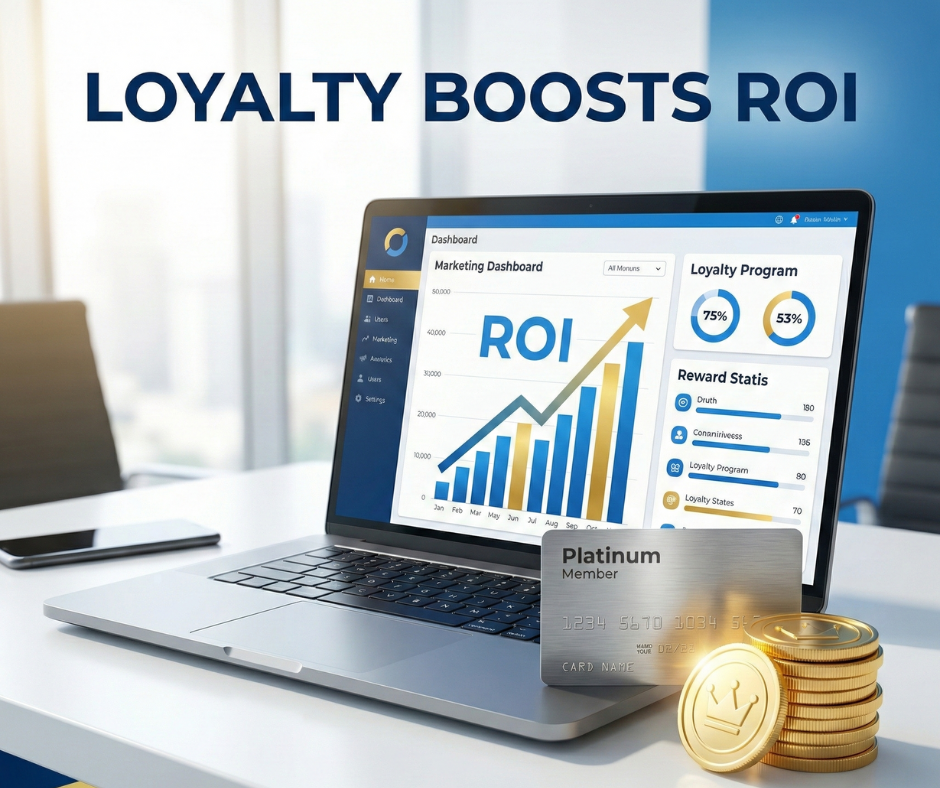
In the current e-commerce climate, achieving a sustainable digital marketing return on investment (ROI) is more challenging than ever. The industry is facing a “perfect storm” of rising customer acquisition costs (CAC), stricter privacy regulations that limit ad targeting, and a fragmented consumer attention span. In 2026, relying solely on a “leaky bucket” strategy—where marketing budgets are poured into acquiring new visitors who rarely return—is a recipe for stagnating margins. Merchants have realized that the path to profitability is not just about finding more people; it is about extracting more value from the people they have already found.
This is where the strategic role of customer retention becomes paramount. While acquisition captures the first transaction, retention captures the lifetime value. For businesses operating on the Magento (Adobe Commerce) platform, loyalty programs act as the technical and psychological bridge that connects e-commerce operations, marketing automation, and first-party data. By incentivizing repeat behavior, understanding how Magento loyalty programs can enhance digital marketing ROI is essential for any merchant looking to provide a predictable framework to stabilize revenue and amplify the effectiveness of every dollar spent on search, social, and email marketing.
What is a Magento loyalty program?

To leverage loyalty for ROI, we must first define its functional components. A loyalty program is a structured marketing strategy designed to encourage customers to continue to shop at or use the services of a business associated with the program.
Core loyalty program concepts
A professional loyalty program is far more than a digital stamp card. It typically involves four primary mechanisms:
- Points: The currency of the program. Customers earn points through purchases, social shares, or account creation. The value of these points must be carefully balanced against profit margins.
- Rewards: The “redemption” phase where points are converted into tangible benefits, such as discount codes, free shipping, or exclusive products.
- Tiers: A hierarchical structure (e.g., Silver, Gold, Platinum) that rewards high-velocity spenders with increasing benefits. Tiers create an “aspiration effect,” encouraging users to spend more to reach the next level of status.
- Referrals: Incentivizing existing members to act as brand advocates. This is the most direct way a loyalty program influences acquisition ROI, as referred customers typically have a higher trust level and lower CAC.
It is critical to distinguish between loyalty and simple discounting. Discounting is a reactive, margin-eroding tactic used to “save” a sale. Loyalty is a proactive, data-gathering strategy that builds an emotional and financial bond between the brand and the buyer.
Loyalty programs in Magento
Magento provides different paths for implementation based on the version used.
- Native Magento capabilities: Adobe Commerce (the enterprise version) includes a native Reward Points module and Private Sales features. These allow for basic points-to-currency conversions and customer segment-based promotions out of the box.
- Extension-based enhancements: For Magento Open Source users, or those on Adobe Commerce requiring more complex logic, the ecosystem offers specialized extensions. Merchants often look for https://bsscommerce.com/magento/blog/magento-2-addons-increase-loyalty/ to add advanced features such as referral tracking, tiered memberships, and deep integration with email service providers (ESPs) like Klaviyo or Dotdigital.
A typical Magento loyalty workflow involves a “transactional listener” that updates a customer’s points balance in the database after an invoice is generated, followed by a “notification trigger” that informs the user of their new balance via a personalized account dashboard or email.
Key digital marketing metrics influenced by loyalty programs
To accurately measure how Magento loyalty programs can enhance digital marketing ROI, merchants must track specific performance indicators that go beyond the “Order Success” page.
- Customer lifetime value (clv): This is the ultimate metric. A successful loyalty program should show that “Member CLV” is significantly higher than “Non-Member CLV” over a 12-month period.
- Repeat purchase rate (rpr): The percentage of customers who have made more than one purchase. A healthy Magento store should aim for an RPR of 25-40% among loyalty members.
- Average order value (aov): Tiers and “Point Accelerators” (e.g., “Spend $10 more to earn double points”) are highly effective at nudging customers to add more items to their cart.
- Conversion rate (cr): Known customers convert at 2-3x the rate of new visitors. Increasing the ratio of “known to unknown” visitors through a loyalty program naturally lifts the site-wide CR.
- Customer acquisition cost (cac): Referrals and organic brand searches generated by loyalists act as a “subsidy” for your paid CAC, lowering the blended cost of acquiring a new customer.
- Email engagement and click-through rates (ctr): Loyalty-related emails (points balance updates, tier rewards) consistently see open rates 2-3 times higher than standard promotional blasts.
How Magento loyalty programs enhance ROI across marketing channels
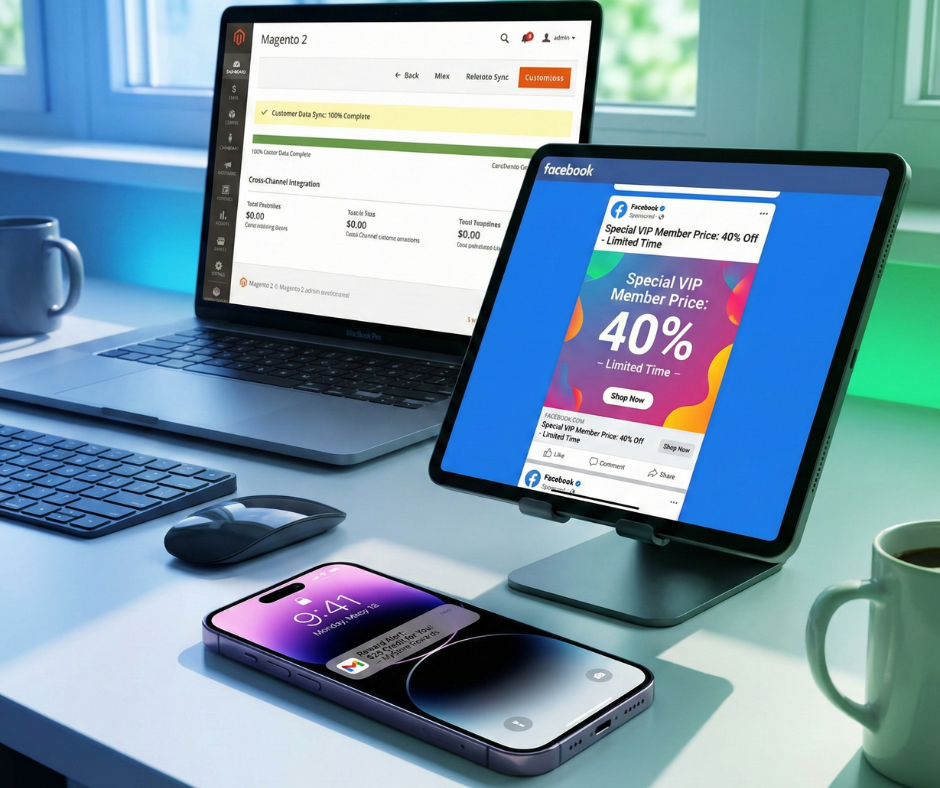
The true power of a loyalty program is realized when it is integrated into the broader digital marketing tech stack. By syncing Magento’s first-party loyalty data with your marketing platforms, you transform a simple “rewards” tool into a high-performance engine for cross-channel growth.
Email marketing and automation
Segmentation is the key to high-ROI email marketing. By syncing Magento loyalty data with an ESP like Klaviyo or Dotdigital, marketers can create hyper-targeted segments that convert at significantly higher rates than generic blasts. Integrating these segments into your broader best practices for Magento newsletter campaigns with SEO-friendly landing pages ensures that every email not only delivers a personalized reward but also drives traffic to a highly optimized, high-converting destination.
- “Point-rich” retention loops: Identify customers with high point balances who haven’t shopped in 60–90 days. An automated “Don’t let your $25 in rewards expire” reminder is infinitely more effective than a standard “We miss you” email. This triggers a specific psychological fear of loss that drives high-intent traffic back to the storefront.
- Tier-threshold urgency: Create segments for customers who are within a specific dollar amount (e.g., $20) of reaching the next loyalty tier. These “Tier Up” campaigns create natural urgency and provide a logical reason for the user to add one more item to their cart, directly boosting AOV and digital marketing ROI.
- Exclusive VIP access: Instead of offering site-wide discounts that erode margins, use loyalty tiers to offer “VIP Early Access” to sales or new product launches. This preserves the profit margin on the general public while rewarding your top 10% of customers, fostering long-term brand affinity.
Paid advertising and bidding intelligence
Loyalty data allows for “Smart Spend” in paid media by helping algorithms focus on value rather than just clicks.
- Retention retargeting: Instead of showing generic product ads to everyone, sync your loyalty tiers with Meta or Google Ads. Show a “Welcome back, [Name], you have 500 points waiting” dynamic ad to members. This level of personalization significantly lowers CPC and increases the ROAS for retargeting campaigns.
- Acquisition suppression and exclusion: One of the easiest ways to improve ROI is to exclude your highest-value loyalty members from “Introductory Offer” prospecting campaigns. Why pay $5 for a click from a loyalist who was already planning to buy? By suppressing these users, you can reallocate that budget to finding actual new prospects.
- High-value lookalike modeling: Export your “Top Tier” loyalty members from Magento and use them as a seed list for Meta or Google Lookalike audiences. This provides the ad platform’s AI with a precise “Golden Customer” profile, helping it find new prospects who mirror the behavior and profitability of your best members, thereby lowering your overall blended CAC.
On-site personalization and discovery
A logged-in loyalty member should have a distinct experience compared to a guest. Magento’s native scoping allows for a tailored journey that reduces discovery friction.
- Loyalty-based pricing and gated content: Use Magento’s “Customer Group” logic to automatically show “Member-Only” prices on the product detail page (PDP). Seeing a lower price “just for them” acts as a powerful conversion nudge. For B2B or high-ticket B2C, use this to gate exclusive technical data or early-access products, making membership feel like a tangible professional asset.
- Dynamic progress visualization: Display a personalized progress bar in the site header or account dashboard. Showing the user’s current points balance and their proximity to the next reward (“Only 150 points until your $10 voucher”) keeps the loyalty program top-of-mind throughout the browsing session.
- Tailored replenishment recommendations: Use purchase history data stored in the loyalty profile to show “Replenishment” suggestions. If a loyalty member buys a 30-day supply of a product, the Magento recommendation engine should highlight that specific item on day 25. This proactive service reduces the likelihood of the customer switching to a competitor.
SEO and authority building
Loyalty programs indirectly support organic growth by generating high-quality engagement signals that search engines value.
- User-generated content (UGC) generation: Incentivizing reviews with loyalty points provides a steady stream of fresh, keyword-rich content for your product pages. Since reviews often contain the exact language and questions prospects use in search queries, this content helps your Magento store rank for high-intent long-tail keywords.
- Brand search volume: Loyal customers search for your “Brand Name” directly rather than generic category terms. High volumes of brand-specific searches signal to Google that your site is a trusted authority in its niche, which can improve your overall domain authority and rankings across the board.
- Natural link building and referrals: A robust referral program encourages users to share links to your products on their personal blogs or social profiles. These natural, peer-to-peer links create a healthy backlink profile that is difficult for competitors to replicate through traditional SEO outreach.
Best practices for high-ROI Magento loyalty programs

A poorly designed program can become a financial liability. Follow these best practices to ensure your loyalty strategy remains profitable.
- Aligning rewards with profit margins: Not all products have the same margin. Consider offering “Double Points” on high-margin private label items while offering standard points on low-margin third-party brands.
- Balancing incentives and sustainability: The redemption rate must be monitored. If points are too easy to earn and provide too much value, you risk “Discount Fatigue”, where customers only shop when they have a reward.
- Designing for long-term engagement: Move beyond “Spend-for-Points.” Reward non-transactional behaviors like writing a review, completing a profile, or following social channels. This keeps the brand top-of-mind even between purchase cycles.
- Integrating with overall marketing strategy: Ensure your loyalty program isn’t a siloed “tech project.” It must be the core theme of your creative campaigns, your social strategy, and your customer service interactions. To maintain this level of cross-channel synergy without overwhelming your internal resources, deploying Magento 2 extensions to automate marketing tasks is a vital step, as it allows your loyalty incentives to flow seamlessly into every part of your digital presence.
Common mistakes that reduce loyalty program ROI
Avoid these pitfalls to protect your margins and your customer experience:
- Treating loyalty as a discount engine: If your program is just a 10% discount in a different wrapper, it won’t build emotional loyalty. It will only attract “mercenary” shoppers who leave the moment a competitor offers 11%.
- Poor segmentation and generic rewards: Sending a “Free Dog Treat” reward to a customer who only buys cat food shows a lack of data integration that devalues the program.
- Ignoring ux and customer experience: If the process of checking points or applying a reward at checkout is confusing or requires multiple steps, users will abandon it. In Magento, ensure your “One Step Checkout” is fully compatible with your loyalty extension.
- Failing to measure or optimize: E-commerce is not static. A points-to-currency ratio that worked two years ago might be unsustainable today. Conduct quarterly audits of your “Cost of Loyalty” and “Revenue from Loyalty.”
Conclusion
In the evolution of e-commerce, Magento loyalty programs have transitioned from a “bonus feature” to a core strategic asset. By systematically increasing CLV and lowering the reliance on expensive acquisition channels, seeing how Magento loyalty programs can enhance digital marketing ROI provides the most stable path to long-term profitability.
The recap of the high-performance framework is simple: use your Magento platform to capture first-party data, turn that data into personalized experiences across every marketing channel, and treat your loyal customers as the primary fuel for your growth engine.
For Magento store owners, the next step is to audit your current retention metrics. Are your top 10% of customers being recognized and rewarded? Is your referral program actively lowering your CAC? By aligning your marketing, UX, and development teams around the goal of customer loyalty, you transform your Magento store from a transactional site into a resilient, high-margin brand that is built to thrive in 2026 and beyond.