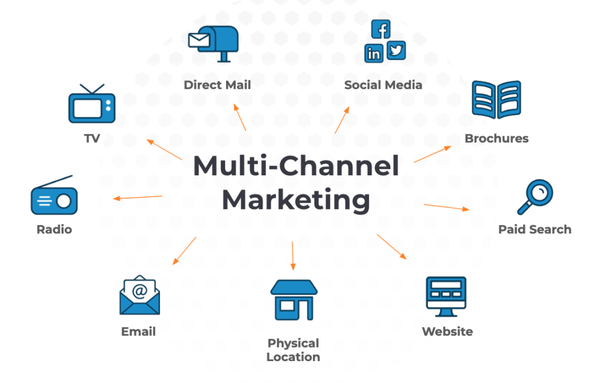
Magento multi-channel marketing is a sophisticated strategy where Magento store owners promote products and engage customers across a diverse range of sales and marketing channels, while maintaining absolute consistency in data, inventory, and brand messaging through a central system. In this ecosystem, Magento (Adobe Commerce) serves as the engine and the “single source of truth,” ensuring that whether a customer interacts with your brand on Amazon, Instagram, or your primary storefront, the experience remains seamless.
What is Magento Multi-Channel Marketing?
At its core, Magento multi-channel marketing is the practice of leveraging Magento’s robust architecture to synchronize and manage marketing activities across various digital and physical touchpoints. Instead of managing each channel in a silo—which leads to data fragmentation and inventory errors—Magento centralizes the operations.
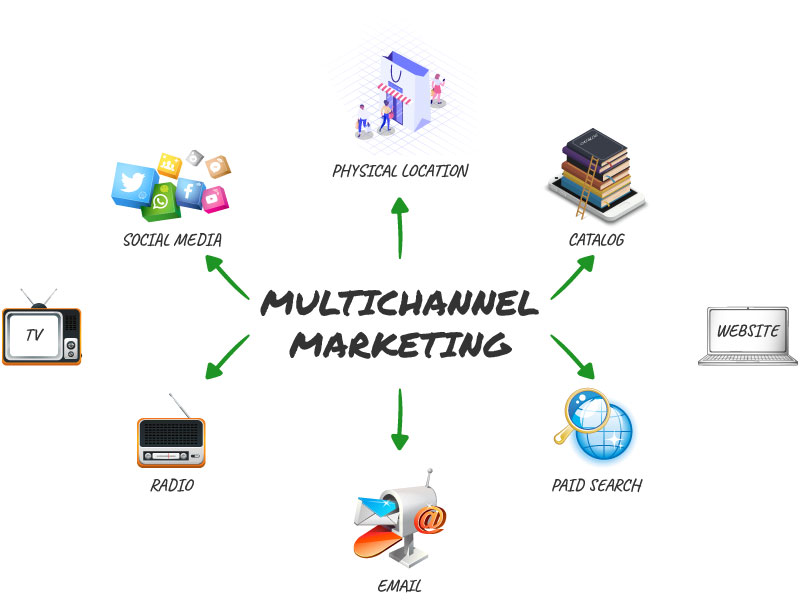
When we talk about multi-channel marketing within the Magento framework, we are referring to the integration of:
- The Primary Website: Your custom Magento storefront which serves as the destination for high-intent traffic.
- Email Marketing: Automated and segmented communication based on Magento’s rich customer data.
- Social Media: Shoppable posts and brand awareness campaigns on platforms like Meta, Pinterest, and TikTok.
- Global Marketplaces: Synchronizing catalog data with giants like Amazon, eBay, and Walmart.
- Paid Advertising: Using Magento product feeds to power Google Shopping and dynamic remarketing.
- Offline Touchpoints: Integrating Point of Sale (POS) systems and CRM-driven physical mailers or in-store promotions.
In this model, Magento acts as the central hub. When a price is updated or a promotion is launched in the Magento admin panel, those changes propagate across all connected channels. This synchronization prevents the “broken experience” where a customer sees a discount on social media that isn’t reflected on the website, or buys an item on a marketplace that is actually out of stock.
Read more: Multi-Channel Marketing Challenges for Magento Stores
Why Multi-Channel Marketing Matters for Magento Stores
For enterprise and mid-market retailers, the decision to use Magento is often driven by a need for scalability and complexity management. Multi-channel marketing is not just a growth lever; it is a necessity in a landscape where the customer journey is non-linear.
- Increasing Brand Visibility Across Customer Touchpoints: The modern consumer rarely buys on the first interaction. They might discover a product on a Pinterest board, research it via Google Search, and finally convert through a retargeting ad on Facebook. By utilizing a multi-channel approach, Magento merchants ensure they are present at every stage of the funnel.
- Reaching Customers on Their Preferred Platforms: Demographics dictate platform preference. Younger audiences may prefer purchasing directly through social “shops,” while B2B buyers might rely on marketplaces or direct site interactions. Magento allows you to meet the customer where they are, rather than forcing them into a single path to purchase.
- Improving Conversion Rates with Consistent Messaging: Inconsistency breeds distrust. If a brand’s tone, pricing, or product availability varies wildly between Amazon and their own site, conversion rates drop. Magento’s ability to push uniform data across channels ensures that the brand promise remains intact, which significantly boosts consumer confidence and conversion.
Centralizing Customer and Order Data for Better Insights
One of the greatest advantages of Magento is its analytical depth. By funneling all channel data back into Magento (or an integrated BI tool), merchants gain a holistic view of the “Customer Lifetime Value” (CLV). You can see that a customer who first found you on eBay has since become a high-value repeat buyer on your direct site, allowing for more intelligent marketing spend.
Scaling Operations Without Fragmentation
Simpler platforms often struggle when a merchant tries to add their fifth or sixth sales channel. Magento’s flexible API architecture and robust extension ecosystem are built for this exact level of complexity. It allows you to scale from $1M to $100M in revenue without needing to migrate to a new core system.
Read more: How Digital Marketing Drives B2B Growth on Magento
Key Multi-Channel Marketing Channels in Magento
To execute a successful multi-channel strategy, one must understand how Magento interacts with each specific channel. Each touchpoint requires a different technical approach but relies on the same foundational data.
Website-Centric Marketing: The Core of Your Magento Strategy
Your Magento storefront is the sun around which all other channels orbit. It is the only channel where you have 100% control over the user experience, the data collection, and the profit margins. To optimize your website as the central marketing hub, focus on the following configuration areas:
- Configuring Catalog Price Rules: Magento allows for granular control over pricing that can be synced across channels.
- Setup Guide: Navigate to Marketing > Promotions > Catalog Price Rule. Here, you can define specific conditions based on category, attribute set, or individual SKU.
- Channel Logic: Use “Customer Groups” to differentiate pricing. For instance, create a “Wholesale” group with specific discounts that apply only to B2B buyers logged into the site, while keeping “General” pricing for marketplace syncs.
- Scheduling: Use the “Action” tab to set fixed or percentage discounts and use the “Content” section to schedule the start and end dates, ensuring your seasonal marketing campaigns are automated.
- Advanced SEO and Landing Page Configuration: To drive organic traffic, your technical SEO must be flawless.
- URL Rewrites: Use Marketing > SEO & Search > URL Rewrite Management to redirect old product URLs or create marketing-friendly “vanity” URLs for social media campaigns.
- Page Builder Implementation: Navigate to Content > Elements > Pages. Use the drag-and-drop Page Builder to create high-fidelity landing pages. Ensure you configure the “Search Engine Optimization” tab for every page, including unique Meta Titles, Keywords, and Meta Descriptions.
- Sitemap Management: Go to Marketing > SEO & Search > Google Sitemap to generate an XML sitemap that includes your latest product additions, ensuring search engines index your new catalog updates immediately.
- Behavioral Personalization and Segmentation: Deliver dynamic content based on how users interact with your multi-channel ecosystem.
- Customer Segments: Navigate to Customers > Segments. You can create segments like “High Spenders” or “Users from Social Ads.”
- Dynamic Blocks: Once segments are defined, go to Content > Elements > Dynamic Blocks. Create content that only appears to specific segments. For example, if a customer arrives via a specific Google UTM parameter, you can display a “Welcome Back” banner with a unique discount code.
- Real-time Personalization: Use Magento’s “Target Rule” feature (Marketing > Communications > Related Product Rules) to automate cross-sells and up-sells based on the visitor’s current cart contents or viewing history.
Email Marketing Integration: Leveraging Magento Data for Retention
Email remains the highest ROI channel for most eCommerce businesses. The power of Magento-based email marketing lies in the data sync.
- Automated Triggers: By integrating platforms like Klaviyo, Dotdigital, or Mailchimp with Magento, you can trigger emails based on real-time events. This includes abandoned cart recovery, back-in-stock notifications, and “Happy Birthday” discounts.
- Advanced Segmentation: Because Magento tracks every order and product interaction, you can segment your email list with surgical precision. For example, you can send a specific campaign only to users who “purchased a Nikon camera in the last 6 months but have not yet bought a tripod.”
- Post-Purchase Follow-ups: Multi-channel success depends on repeat business. Magento can trigger automated review requests or “How-to” guides after a purchase, regardless of whether that purchase happened on the site or an integrated marketplace.
Social Media & Paid Advertising: Driving Traffic via Magento Feeds
Social media is no longer just for “likes”; it is a vital sales engine. Magento facilitates this through automated product feeds.
- Dynamic Product Ads (DPA): By exporting your Magento product catalog to Meta (Facebook/Instagram) or Google, you can run ads that automatically show users the exact products they viewed on your site.
- Shoppable Social Media: Magento can sync your inventory with Instagram Shops and TikTok Shop. This allows users to checkout without leaving the social app, while the order is still pushed back into your Magento admin for fulfillment.
- Lookalike Audiences: You can export your high-value customer segments from Magento and upload them to ad platforms to find “lookalike” users. This ensures your ad spend is targeted at people most likely to resonate with your brand.
Marketplace Selling: Expanding Reach via Amazon, eBay, and Beyond
Marketplaces offer access to massive built-in audiences. However, managing them manually is a recipe for disaster.
- Centralized Inventory Management: This is the most critical function. If you have 10 units of a product, and you sell 4 on Amazon and 3 on eBay, Magento immediately updates your website stock to 3. This prevents overselling and protects your seller ratings.
- Unified Pricing Logic: You might want to price items higher on Amazon to offset their 15% referral fee. Magento allows you to set “channel-specific” pricing while still managing the product description and images from a single location.
- Global Expansion: Magento’s multi-store and multi-currency capabilities make it the ideal backend for selling on international marketplaces like Tmall in China or Mercado Libre in Latin America.
CRM and Offline Channels: Creating a Truly Omnichannel Experience
For businesses with physical stores or high-touch sales cycles, the integration between Magento and a CRM (Customer Relationship Management) system is vital.
- Synchronized Customer Profiles: When a customer buys something in a physical store, the POS system should update their profile in Magento. When that customer later visits the website, the site “knows” their history, allowing for a consistent loyalty program experience.
- Omnichannel Promotions: Magento can generate unique coupon codes that are valid both online and in-store. This allows for “Buy Online, Pick Up In Store” (BOPIS) marketing, which is a significant driver of foot traffic for hybrid retailers.
- Sales Force Automation: For B2B Magento users, integrating with a CRM like Salesforce or HubSpot allows sales teams to see exactly what a lead has been looking at on the website, enabling more informed and successful sales calls.
Strategies for Optimizing Magento Multi-Channel Performance
Simply connecting the channels isn’t enough; they must be optimized for maximum efficiency and growth.
- Prioritize Data Cleanliness: Before pushing your Magento catalog to five different marketplaces, ensure your product data (titles, descriptions, attributes) is optimized. Use a PIM (Product Information Management) tool if your catalog exceeds 10,000 SKUs.
- Monitor Channel-Specific ROI: Not every channel will be profitable for every product. Use Magento’s reporting to identify which channels have the highest customer acquisition cost (CAC) and shift your budget accordingly.
- Invest in Middleware: While Magento is powerful, using a dedicated integration platform (like Celigo, M2E Pro, or Channable) can provide a more user-friendly interface for managing the “mapping” of data between Magento and third-party platforms.
- Test and Iterate: Multi-channel marketing is an ongoing process. A/B test your landing pages, experiment with different ad creatives on TikTok versus Instagram, and constantly refine your email segmentation based on the latest Magento purchase data.
Conclusion
Magento multi-channel marketing represents the pinnacle of modern eCommerce strategy. By positioning Magento as the central nervous system of your business, you gain the ability to expand your brand’s footprint across the web without losing control of your operations.
The strength of this approach lies in its scalability. Whether you are expanding into new marketplaces, diving into social commerce, or bridging the gap between digital and physical retail, Magento provides the flexibility to maintain a “single source of truth.” In an era where customer attention is fragmented across dozens of platforms, the ability to provide a consistent, data-driven, and seamless brand experience is what separates market leaders from the rest. Investing in a robust multi-channel setup today ensures that your Magento store is not just a website, but a global commerce engine ready for the future of retail.